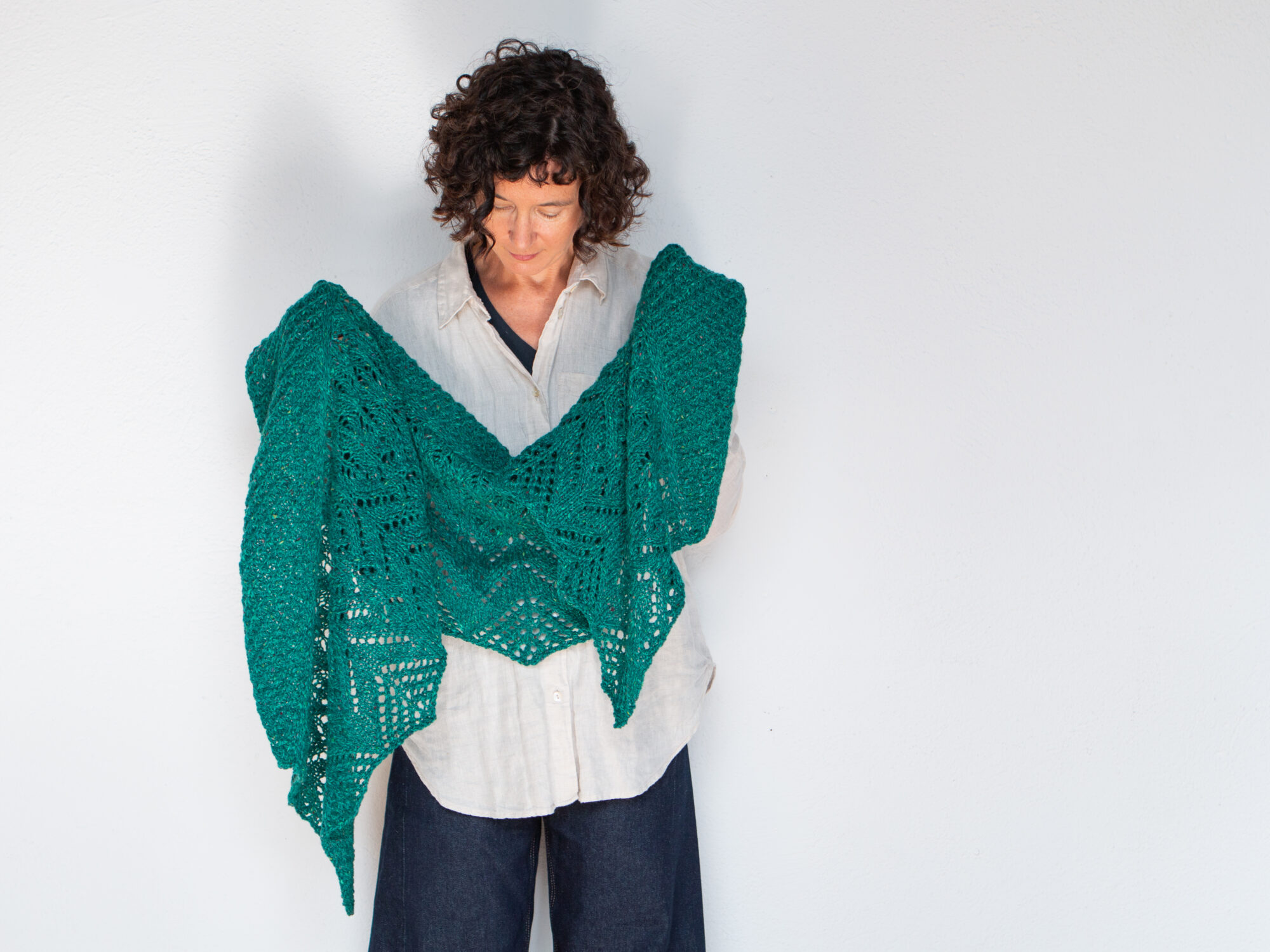
Lace knitting has a bit of a reputation.
For example, when I hear the word ‘lace’ I immediately conjure visions of ethereal, delicate fabric that is as light as air.
But lace doesn’t have to be delicate.
It can be textured. It can be substantial. It can be warm enough for winter.
And that’s exactly where Coscair, our Winter Seasons Club shawl, comes in.
The Irish word coscair means thaw, and the design takes its inspiration from those first signs that winter is finally beginning to loosen its grip. Snowdrops pushing through the ground. Buds beginning to appear. That tiny promise that spring is on its way, even when the days are still decidedly wintry.
Coscair is designed to introduce you to lace knitting at your own pace, using Deas, our woollen-spun Aran-weight yarn. The heavier yarn and larger needles make the lace stitches easier to see and handle, while still giving you that wonderfully open fabric once the shawl is blocked.
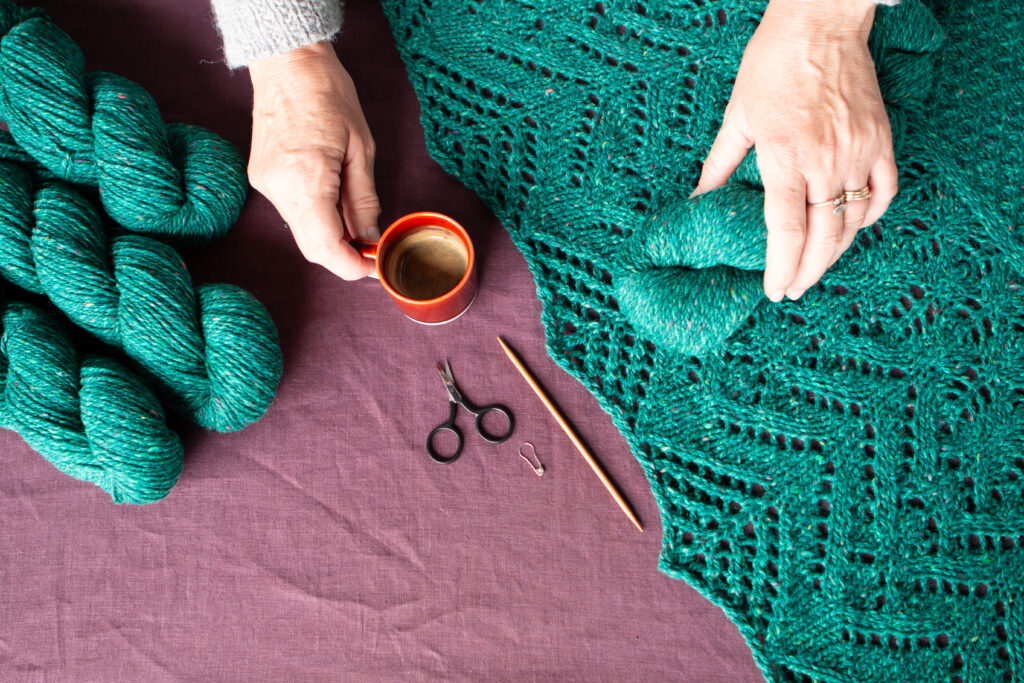
What Is Lace?
At its simplest, lace knitting is a combination of increases and decreases.
Lace uses a series of increases (in the form of yarnovers) and decreases to create a stitch pattern that moves the stitches across the fabric of your knitting. Lace is knit with larger needles than standard for the yarn weight, which creates an open fabric.
Yarnovers create new stitches and decreases remove them, shifting the stitches around the fabric to create the motifs and open spaces that make lace look, well, like lace.
And here’s the important bit: lace doesn’t have to be knitted in laceweight yarn.
Coscair is worked in Aran-weight Deas, using larger-than-usual needles to create an open, airy fabric. The slightly sturdier yarn makes those lace stitches easier to see and gives you a much more forgiving introduction before you decide to venture into finer yarns.
Then comes the magic.
Before blocking lace fabric is often wrinkled and unimpressive. A crumpled heap of knitting does not exactly scream beautiful botanical shawl. When you block, you stretch your knitting out which opens up your lace pattern this is where your lace knitting transforms from an unimpressive bundle into an open, flowing, beautiful fabric!
About Our Winter Seasons Club
Your Winter Seasons Club includes a full video workshop for Coscair, so you won’t be left staring at a lace chart wondering what on earth happened to your stitches.
We’ll work through the project with you from start to finish, including the points where you might need a little extra help.
You’ll get guidance on:
- picking up stitches along the long edge of the upper panel
- working gathered stitches and double decreases
- keeping track of lace repeats
- using stitch markers to make mistakes easier to spot
- placing lifelines before the knitting gets too far away from you
- joining yarn using wet-felting
- and, of course, firmly blocking the finished lace
The pattern gives you choices throughout, so you can decide how much lace you want to tackle.
Think of it less as here is the lace, good luck and more as a guided introduction.
From here you can choose a digital club which includes the pattern, workshop seriers, live zoom launch and recordings as well as a private community thread for comments, discussion and interactions.
Our full club is everything in our digital club plus our specialist chosen yarns and club treats.
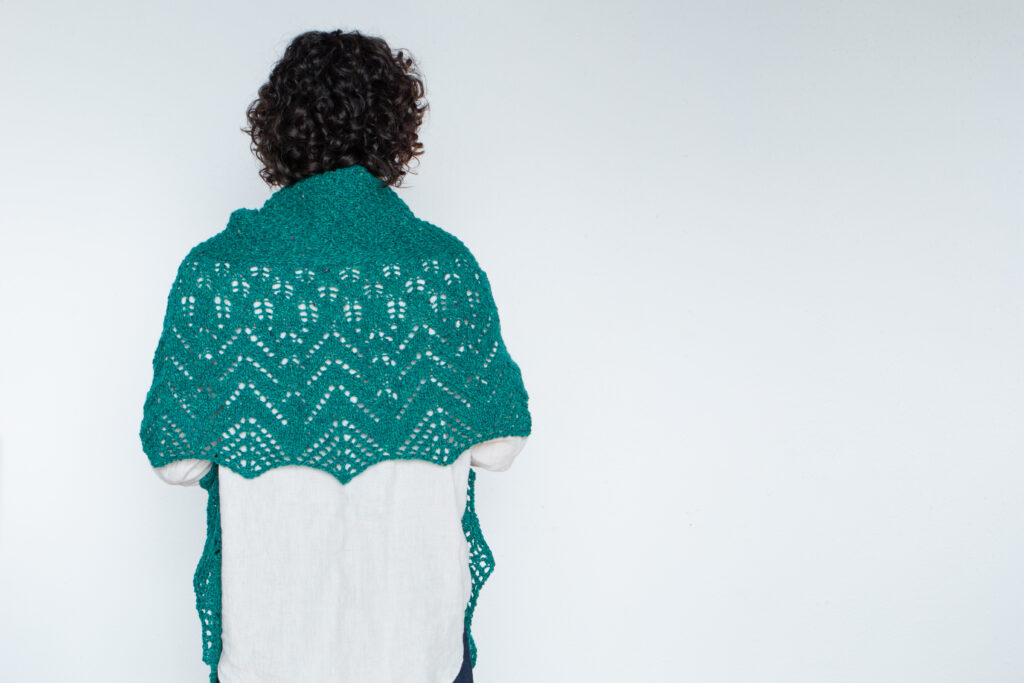
Shawl Overview
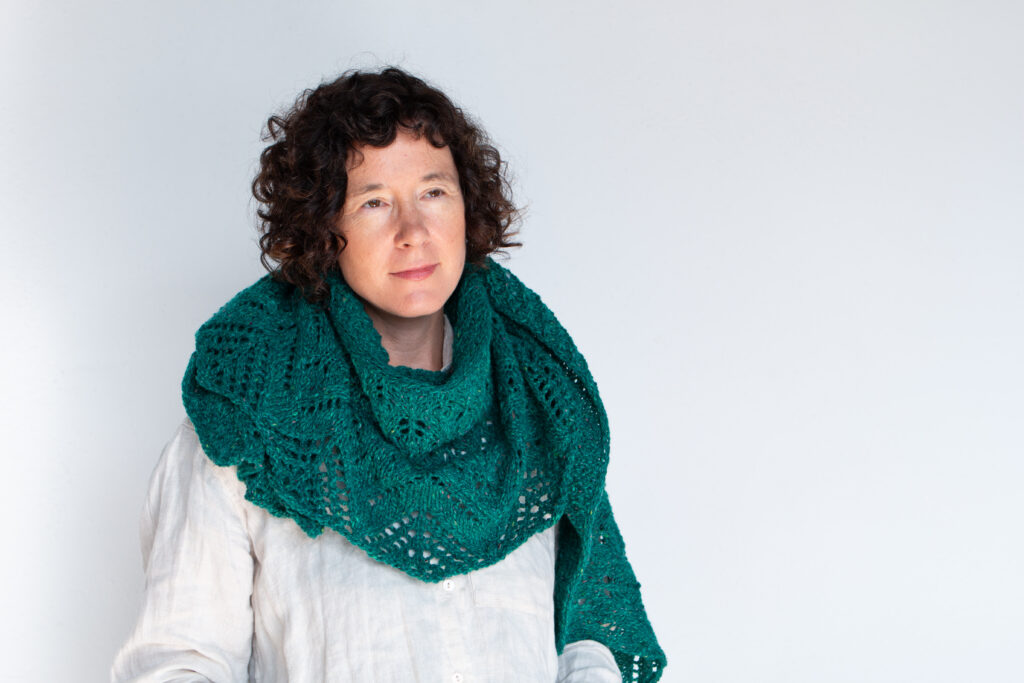
Coscair was designed by Irish designer Eimear Earley and is a generously sized shawl, measuring approximately 68” / 172.5 cm wide and 27″ / 68 cm deep when finished.
The construction is part of what makes this design particularly interesting.
Rather than beginning with a long cast-on edge, you start with a long, narrow band worked from side to side. This becomes the upper panel of the shawl. You can work this panel in reverse stockinette stitch for a simpler finish, or choose the gathered Star Stitch version shown in the sample for a little more texture. Once the band is complete, you’ll pick up stitches along one edge and work downwards into the main lace section.
Again, you have a choice.
You can work the full lace version, with bloom and leaf motifs throughout, or simplify the lower section by working stockinette and keeping the lace to the edges. The increases are built into the lace motifs, creating a gently curved shape that sits beautifully around the shoulders.
The final lace section uses consecutive increases and decreases to create the flared lower edge. Once firmly blocked, this opens out dramatically to show off the full pattern.The bloom and leaf motifs are inspired by late-winter flowers, particularly the snowdrops that appear when winter is still very much hanging around.
A little bit of spring, just when you need it.
Pattern Details
FINISHED MEASUREMENTS
Width: 68” / 172.5 cm
Depth: 27” / 68 cm
YARN
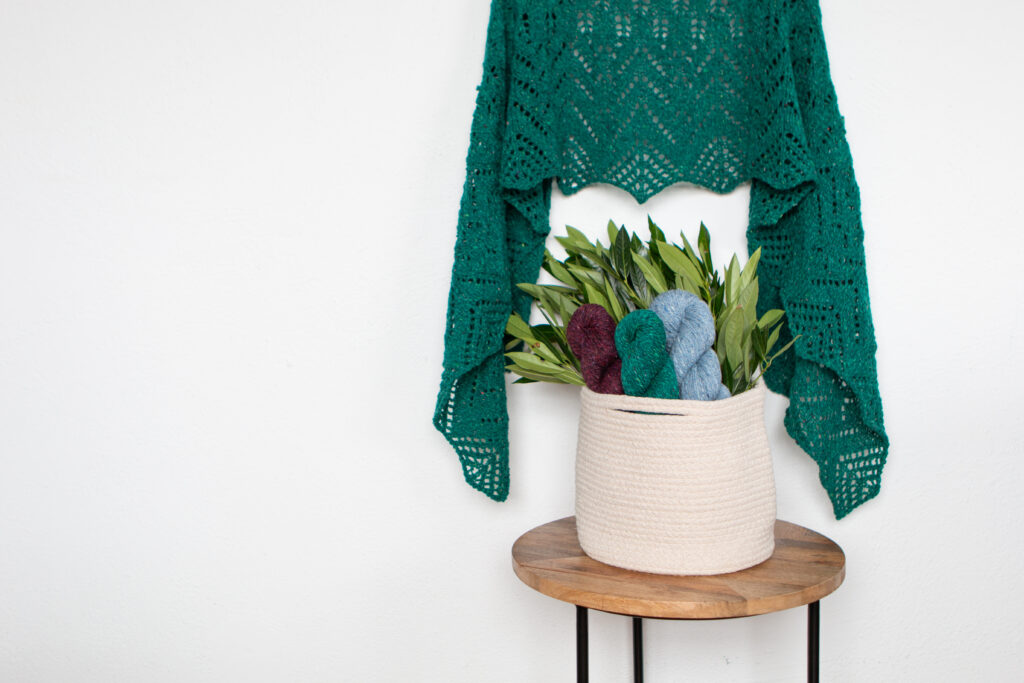
Stolen Stitches ‘Deas’ (86% Merino, 14% Mohair; 202 yds / 185 m per 3.6 oz / 100 g); colour: Jade; 4 skeins
Approximate Yardage: 779 yds / 712 m
NEEDLES & NOTIONS
US size 9 / 5.5 mm straight or circular needles, any length, for working flat
US size 10 / 6 mm straight or circular needles, any length, for working star stitch, flat
Always use a needle size that gives you the gauge listed, as every knitter’s gauge is unique.
Stitch markers, tapestry needle, cable needle.
GAUGE
14 sts and 20 rows = 4” / 10 cm in Bloom Lace, on smaller needles after firm blocking
17 sts and 20 rows in St St or Rev St St, on smaller needles after firm blocking
21 sts and 19 rows = 4” / 10 cm in Star Stitch, on larger needles after firm blocking
Winter Seasons Club Yarn
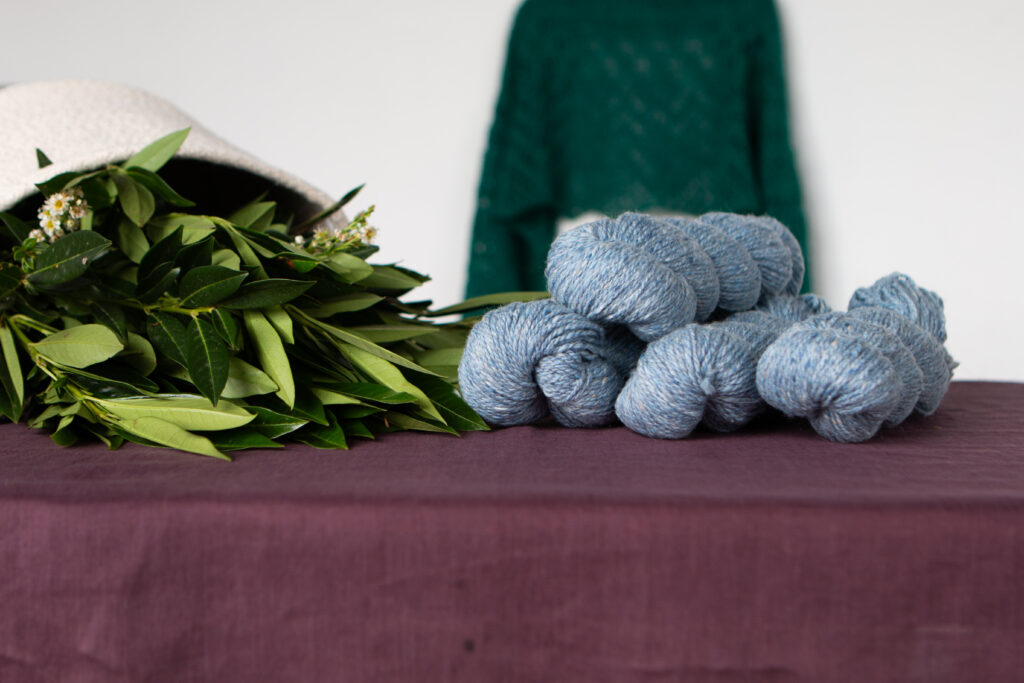
Coscair is worked in Deas, our woollen-spun Aran-weight yarn, custom spun for us in Donegal.
It combines 86% Merino with 14% Mohair, bringing together the softness of merino with the warmth and lightness of mohair. Because it’s woollen spun, Deas creates a surprisingly light fabric for an Aran-weight yarn, and it blooms beautifully when wet blocked.
The Aran weight also makes Coscair a particularly approachable introduction to lace. The stitches are substantial enough to see and handle easily, while the larger needles create plenty of space for the lace motifs to open up during blocking.
And there’s another useful little trick built into the yarn.
Deas can be joined using wet-felting, which means you can make an almost invisible join without creating another handful of ends to weave in later. And if you’ve ever finished a project with a lot of ends to weave in, you’ll appreciate this immensely.
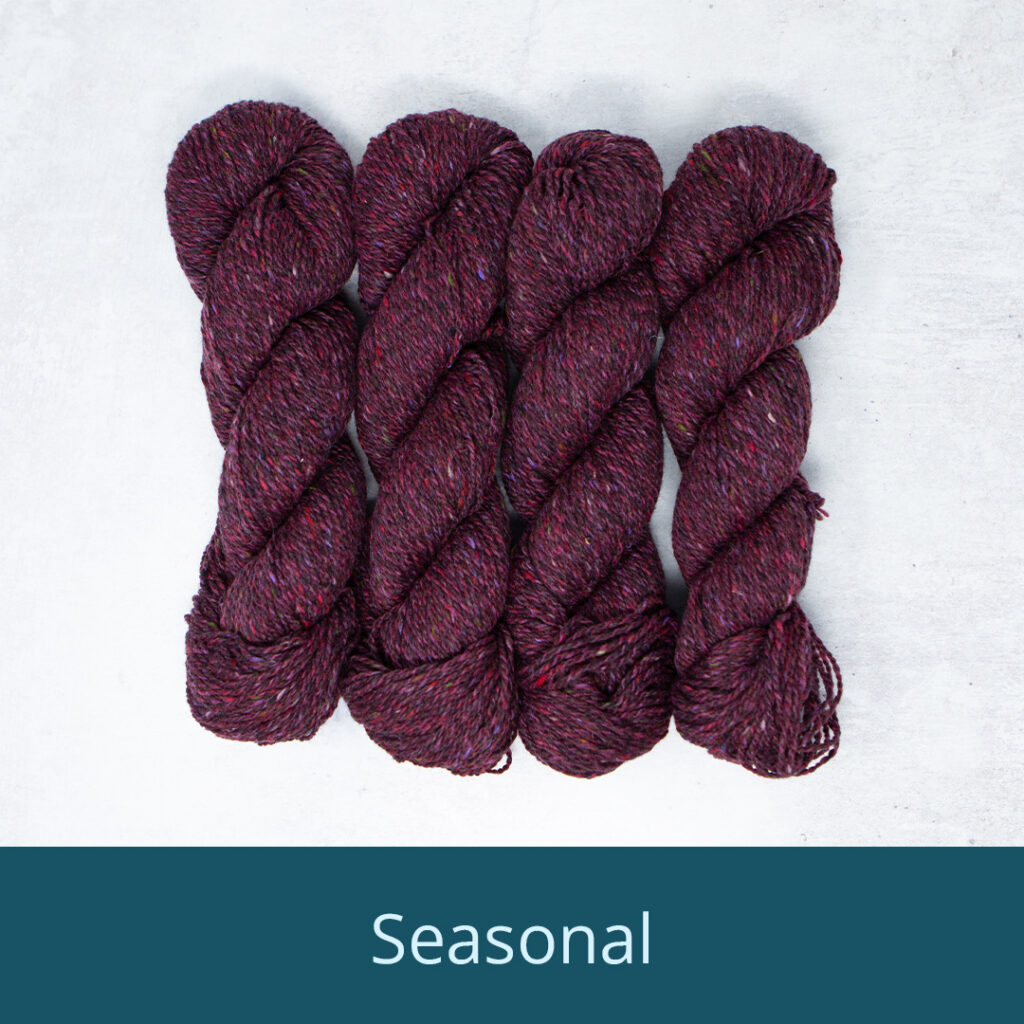
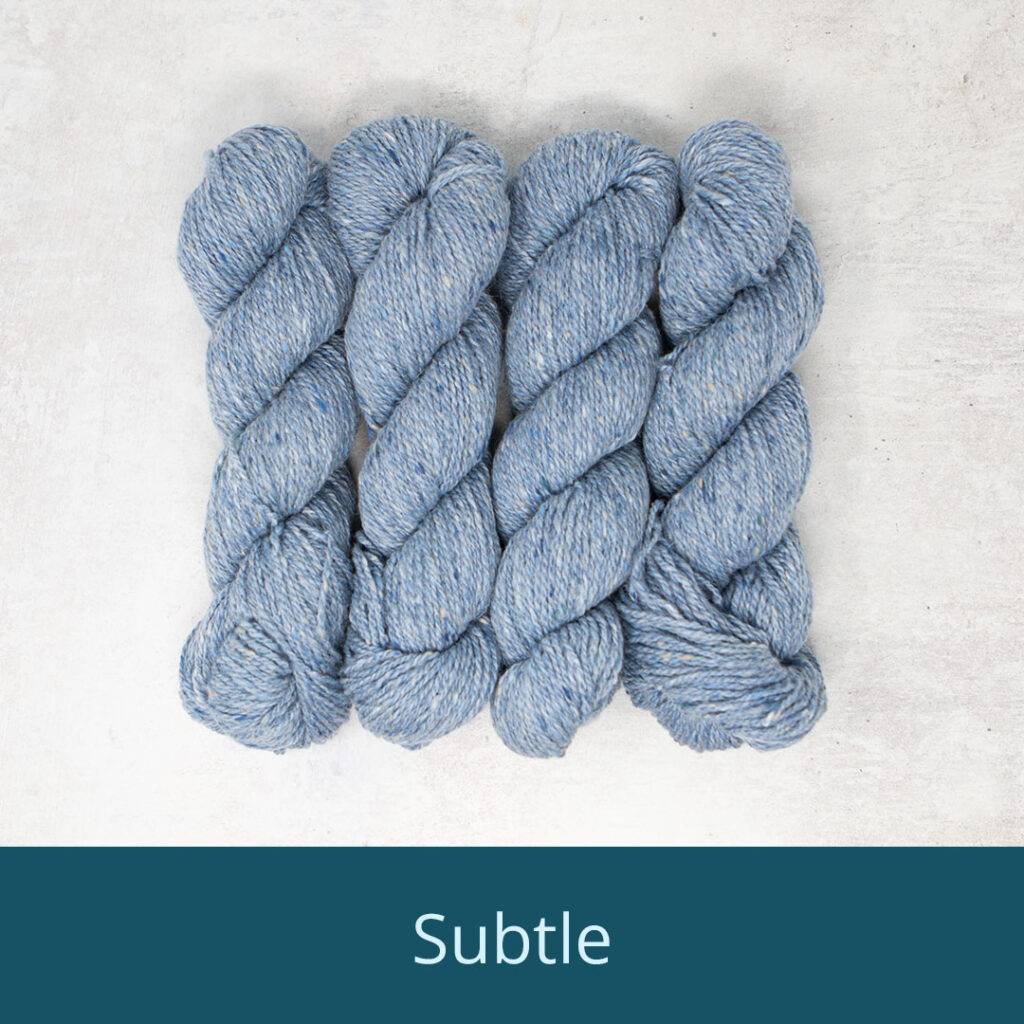
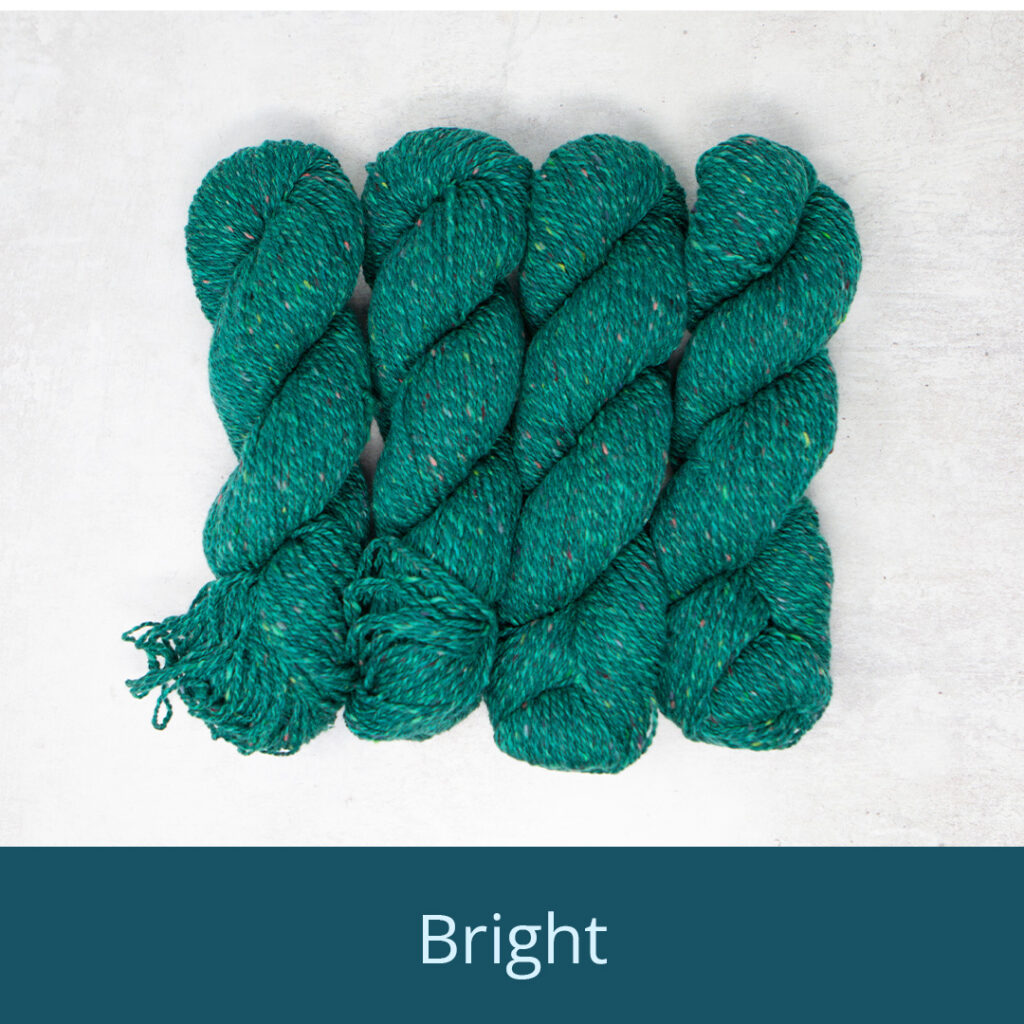
In our Full Club, you’ll receive four skeins of Deas for the project in your chosen colour. All you need to do is pick your perferred colour options from below:
Seasonal
Subtle
Bright
Find Out More
If you’d like to know more about the yarns, pattern and club technique just press play on this video:
How to Join
This pattern is a part of our Winter Seasons Club 2026.
When you join the club, you’ll receive access to this design along with a full set of step-by-step video tutorials, guiding you through the technique from start to finish. We’ll also be hosting recorded Zoom sessions where we talk through the pattern in detail, explore the technique together, and answer questions as they come up.
And because Coscair gives you several ways to approach the lace, you can choose the version that feels right for you. Start with the simpler options, work the full lace design, or use the project to push yourself a little further.
If you’ve always looked at lace knitting and thought that’s lovely, but perhaps not for me, Coscair is a good place to reconsider.
Sometimes you don’t need smaller needles and finer yarn. Sometimes you just need a pattern and support that lets you learn as you go.
Click the button below to find out more and join the club from 8pm October 1st, 2026.
MEET OUR FEATURE DESIGNER

Eimear Earley lives in Dublin, Ireland, with two small humans and a supportive spouse. Eimear originally learned to knit as a schoolchild, dabbling with leftovers of yarn and absolutely no concept of gauge or ease during her teenage years. After spending her student years playing with molten glass, she now gets her creative kicks from knitting and spinning wool—much more practical pursuits. Eimear loves to reinterpret old Irish things into modern knitwear, from ancient gold artifacts to less ancient cable knitting.
Stay up to date with all of Eimear’s designs and publications here.